
Barriers in Plain Sight
Pedestrian Accessibility, Safety, and Well-Being in Urban Green Space
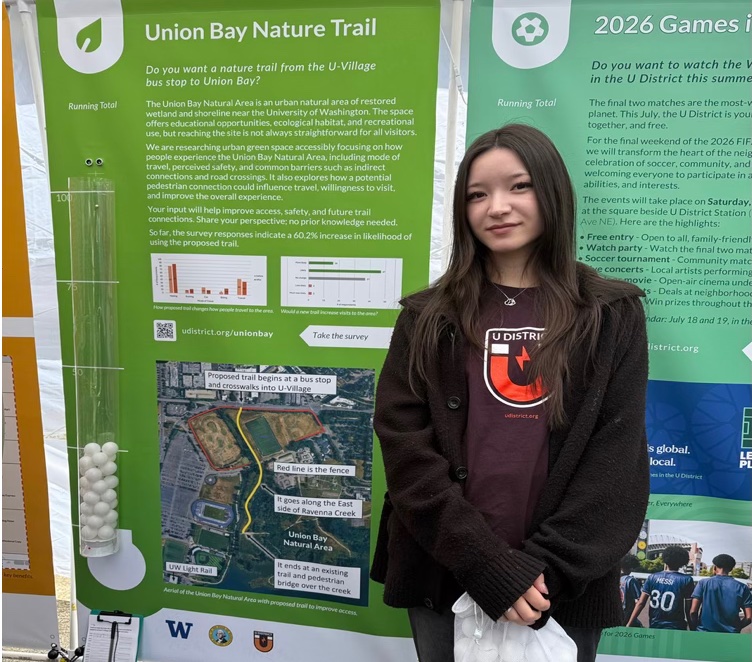
RESEARCHER
Mia Wood
School of Environmental and Forest Sciences, University of Washington
U District Advocates
Introduction
Urban green spaces provide measurable environmental and public health benefits, including improved physical health, mental well-being, and climate resilience [1]. These benefits are widely recognized, but access to them is not evenly distributed. Social, structural, and mobility barriers such as unsafe pedestrian infrastructure, limited transit connectivity, and roadway design shape who is able and willing to enter these spaces [2].
The objectives of this study are to:
- Identify how user groups experience and perceive accessibility, safety, and health benefits in green urban spaces.
- Examine disparities across demographic groups in order to identify equity gaps.
- Assess how proposed pedestrian infrastructure improvements may change user behavior.
We evaluate these objectives using the proposed Union Bay Trail as a case study.
Methods
This study evaluates the Union Bay Natural Area (UBNA) current site accessibility, safety perceptions, and visitation patterns among users, as well as how a proposed trail connection may influence these experiences and behaviors.
A cross-sectional survey was distributed through community outreach and intercept surveying. Survey questions assessed travel behavior, site familiarity, perceived safety, accessibility, and willingness to visit under the proposed trail connection scenario. Responses were analyzed to identify differences across user groups and behaviors.
Study Site Context
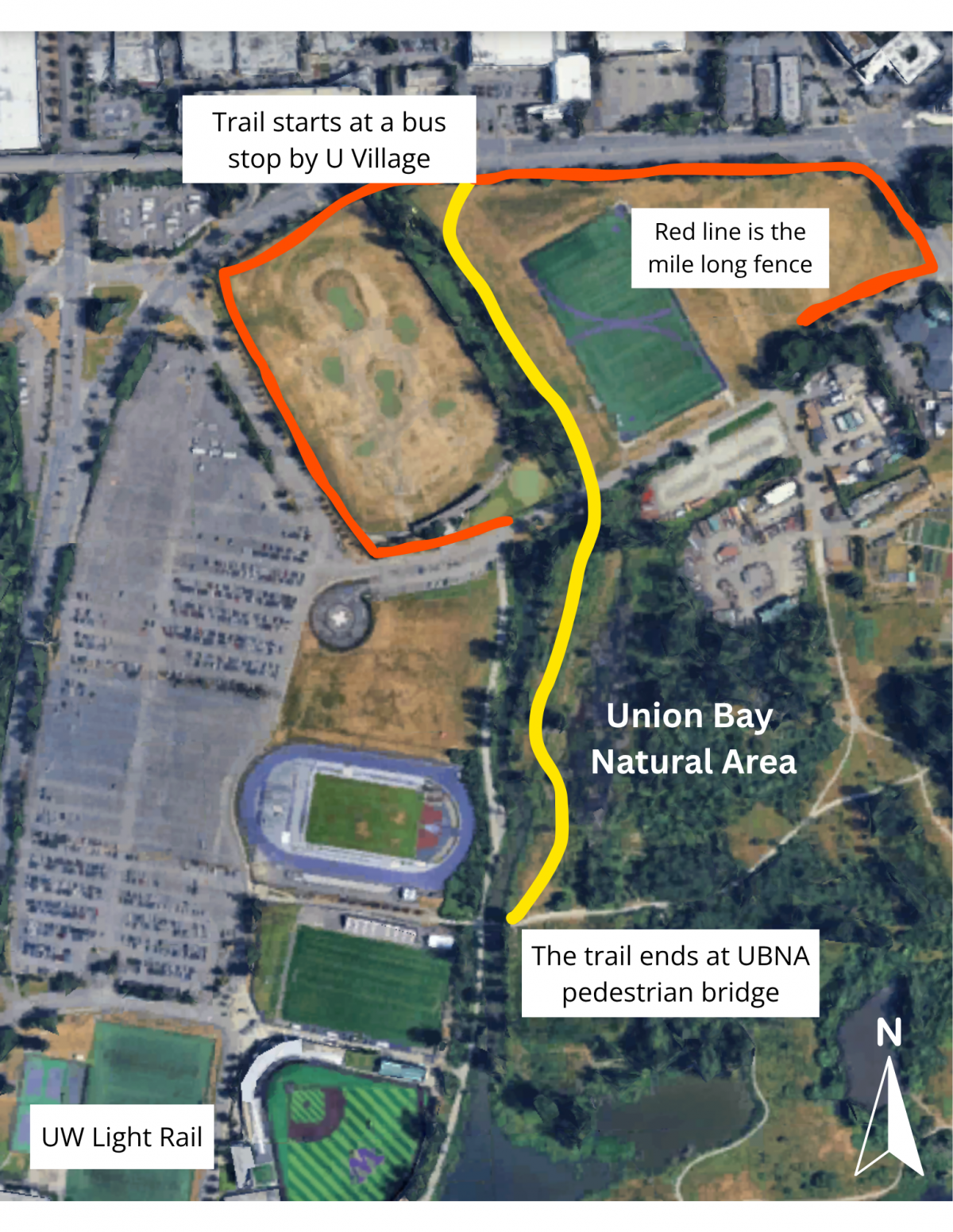
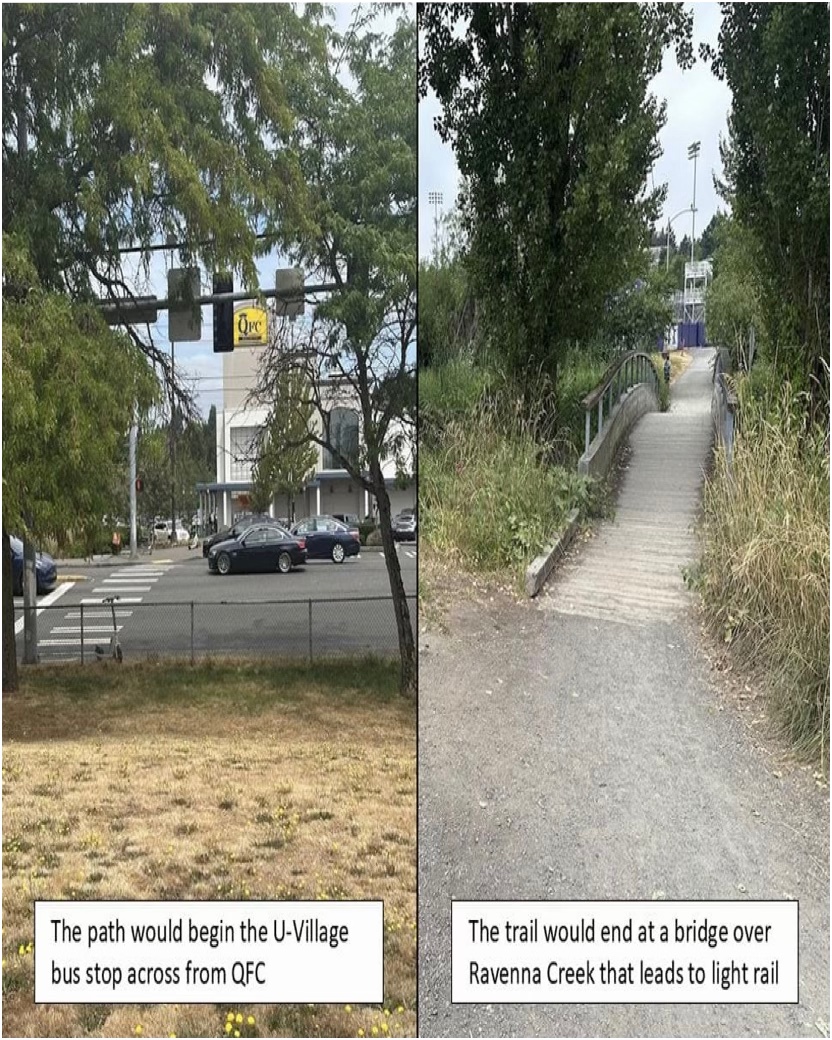
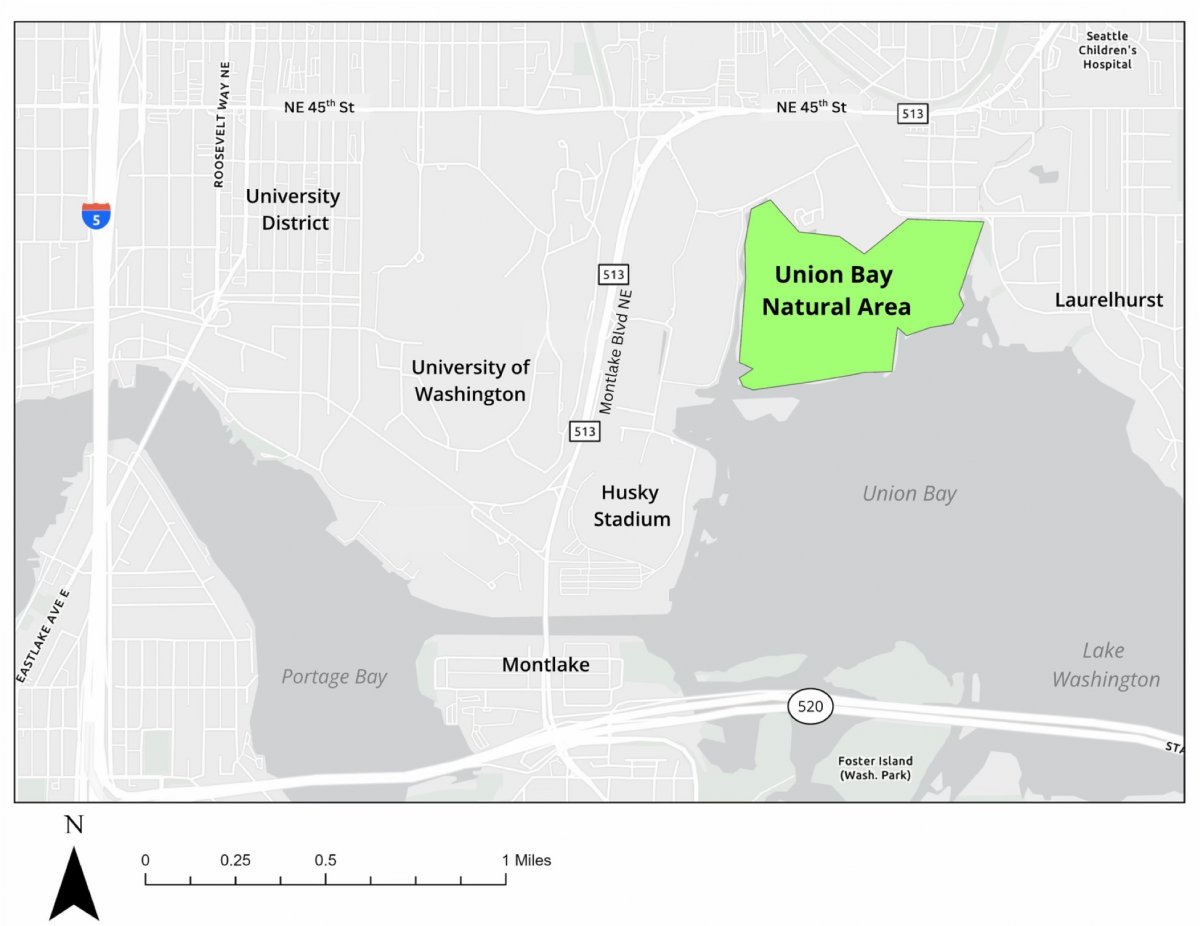
This study focuses on the Union Bay Natural Area (UBNA) a restored wetland and shoreline near the University of Washington providing ecological, educational, and recreational use. However, access to the site can be challenging for pedestrians and transit users due to barriers such as a mile-long fence and surrounding roadway infrastructure.
A trail connection has been discussed as a potential infrastructure improvement to increase connectivity between nearby neighborhoods, transit routes, and the UBNA.
Results
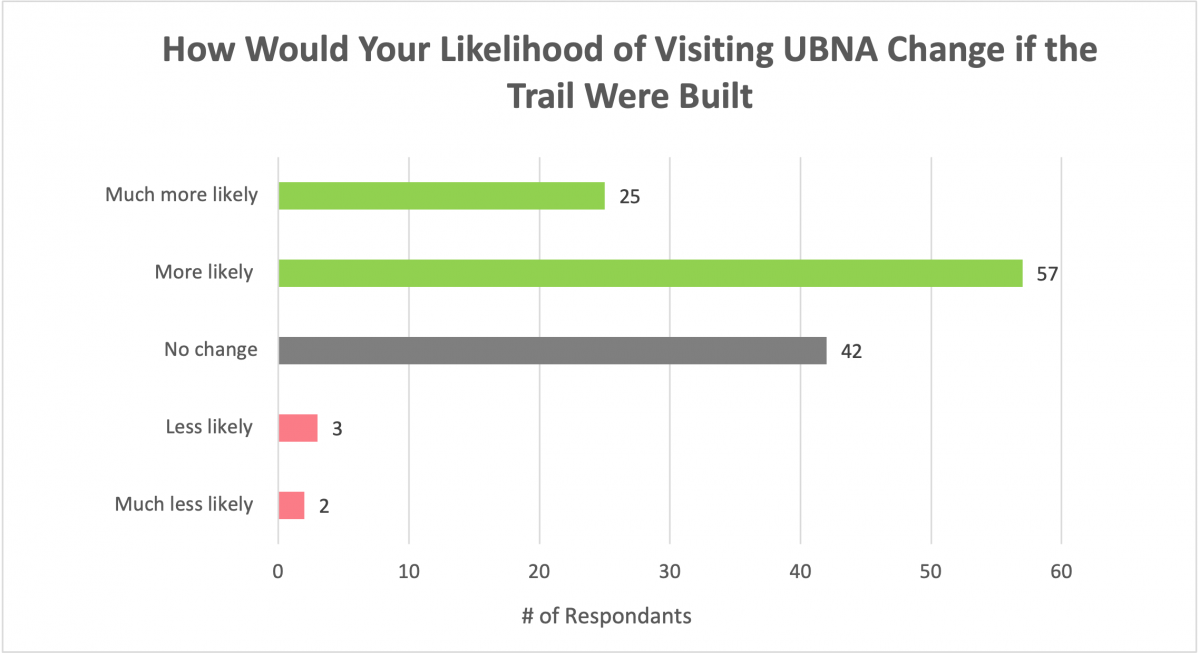
Survey responses show that proposed trail connection increases willingness to visit the UBNA and shift transportation behavior toward more active modes of travel.
- 62.6% of respondents say they would be more likely to visit with a direct trail connection if it were created (Figure 4).
- 3.8% of respondents indicated they would be less likely to use the trail.
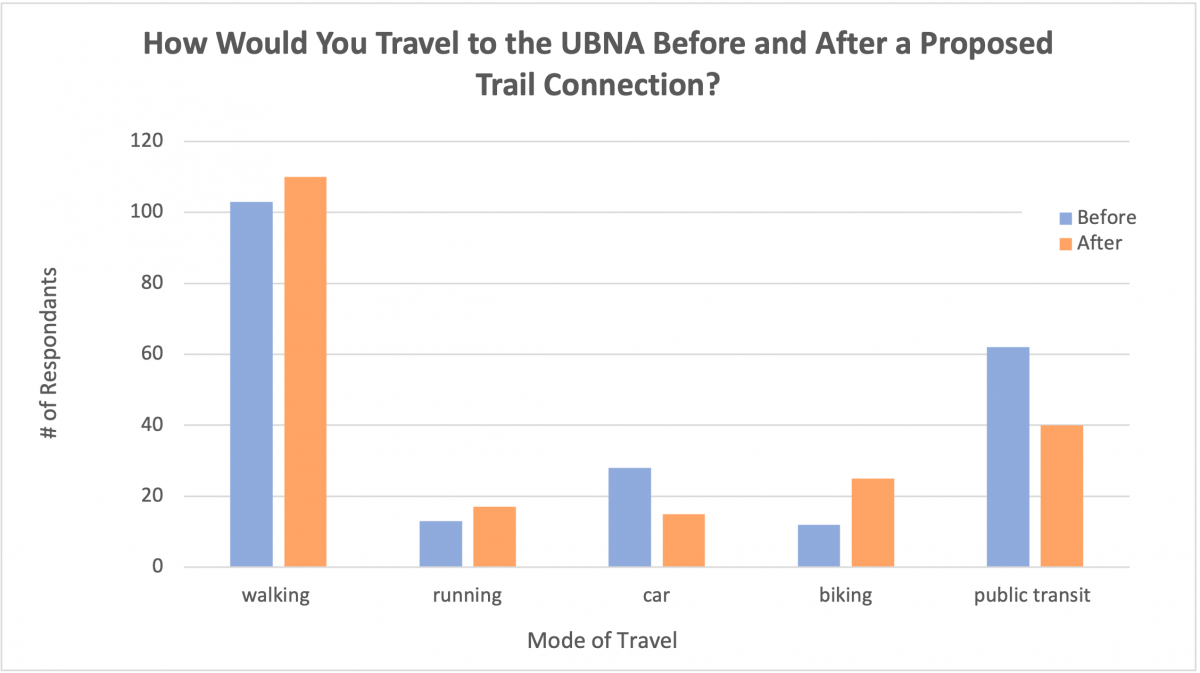
User travel patterns also changed under the proposed trail scenario (Figure 5).
- Responses for walking and biking increased
- While car usage decreased by 46.4%
These findings suggest that improved pedestrian connectivity may encourage greater use of active transportation when accessing the UBNA.
Discussion
- Accessibility is not experienced equally. Respondents identified roadway crossings, indirect routes, and limited access points as barriers, disproportionately affecting individuals who walk, bike, or use public transit.
- Transportation infrastructure around the UBNA favors automobile travel, creating challenges for users traveling without a car despite proximity to nearby neighborhoods and transit routes.
- Most respondents reported they would be more likely to visit the UBNA if the proposed trail were constructed. Increased walking and biking suggests that improved pedestrian connectivity encourages greater use of active transportation.
Share Your Thoughts
All community members are invited to share their perspective through a short anonymous survey, regardless of how often you visit the area.

Downloads
Final Report
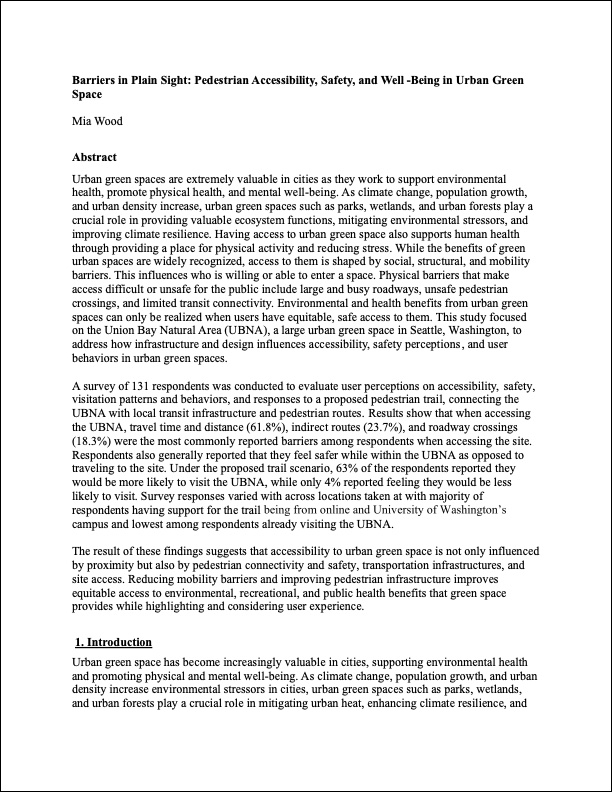
Barriers in Plain Sight: Pedestrian Accessibility, Safety, and Well-Being in Urban Green Space
Poster
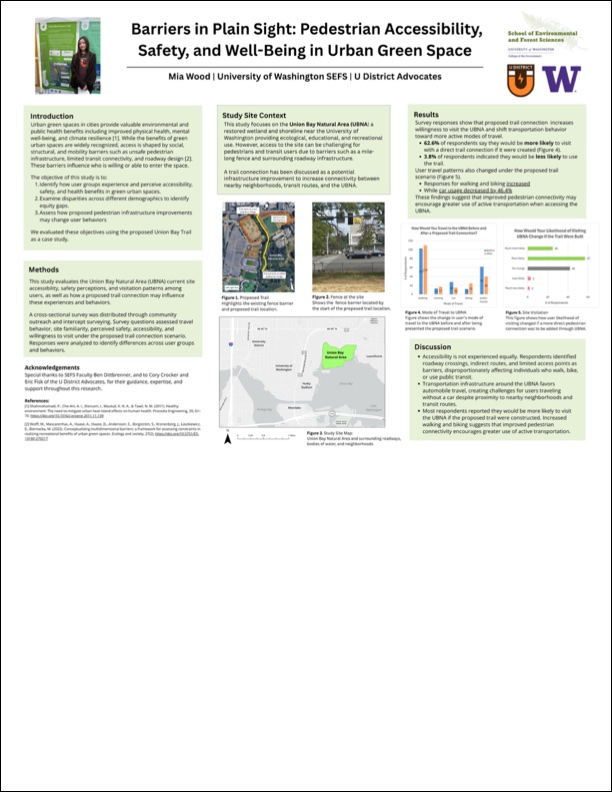
Final presentation poster
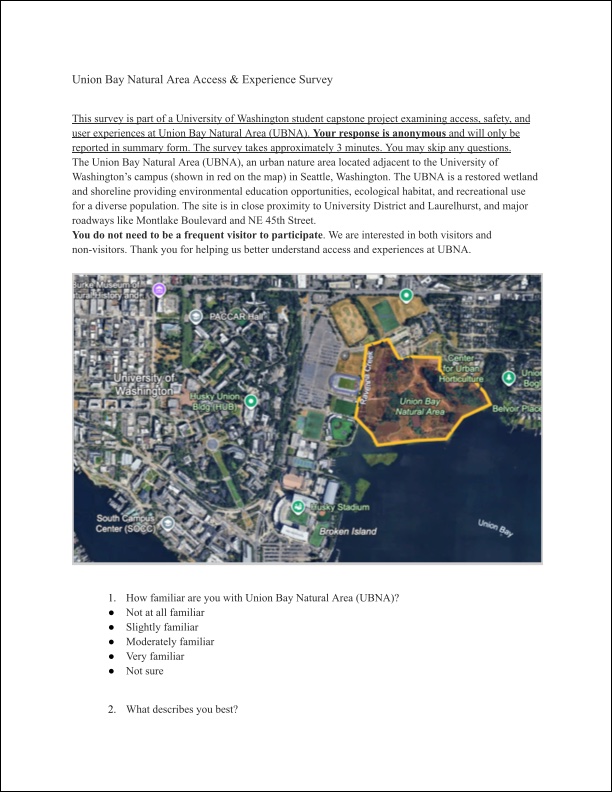
Survey
Union Bay Natural Area Access & Experience Survey
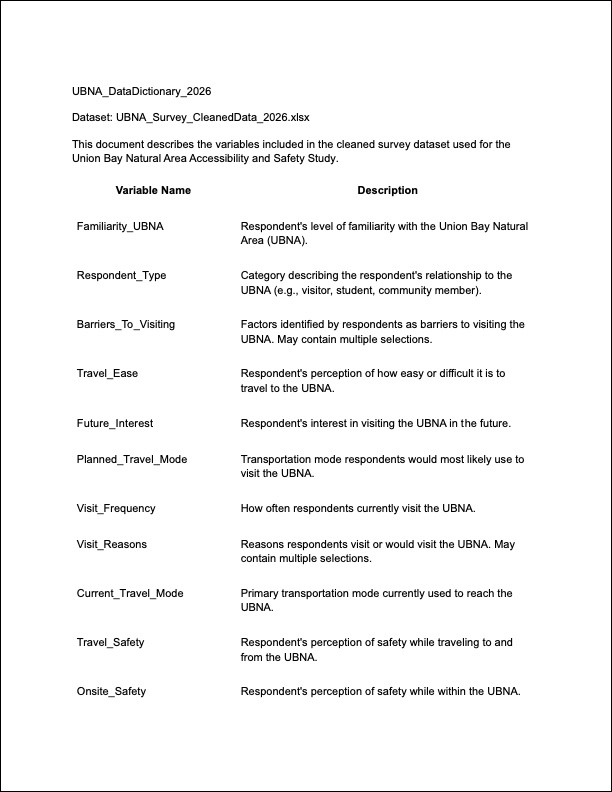
Data Dictionary
Variables included in the survey dataset
Acknowledgements
Special thanks to SEFS Faculty Dr. Ben Dittbrenner, and to Cory Crocker and Eric Fisk of the U District Advocates, for their guidance, expertise, and support throughout this research.
References
1. Shahmohamadi, P., Che-Ani, A. I., Etessam, I., Maulud, K. N. A., & Tawil, N. M. (2011). Healthy environment: The need to mitigate urban heat island effects on human health. Procedia Engineering, 20, 61–70. https://doi.org/10.1016/j.proeng.2011.11.139
2. Wolff, M., Mascarenhas, A., Haase, A., Haase, D., Andersson, E., Borgström, S., Kronenberg, J., Łaszkiewicz, E., Biernacka, M. (2022). Conceptualizing multidimensional barriers: a framework for assessing constraints in realizing recreational benefits of urban green spaces. Ecology and society, 27(2), https://doi.org/10.5751/ES-13180-270217